



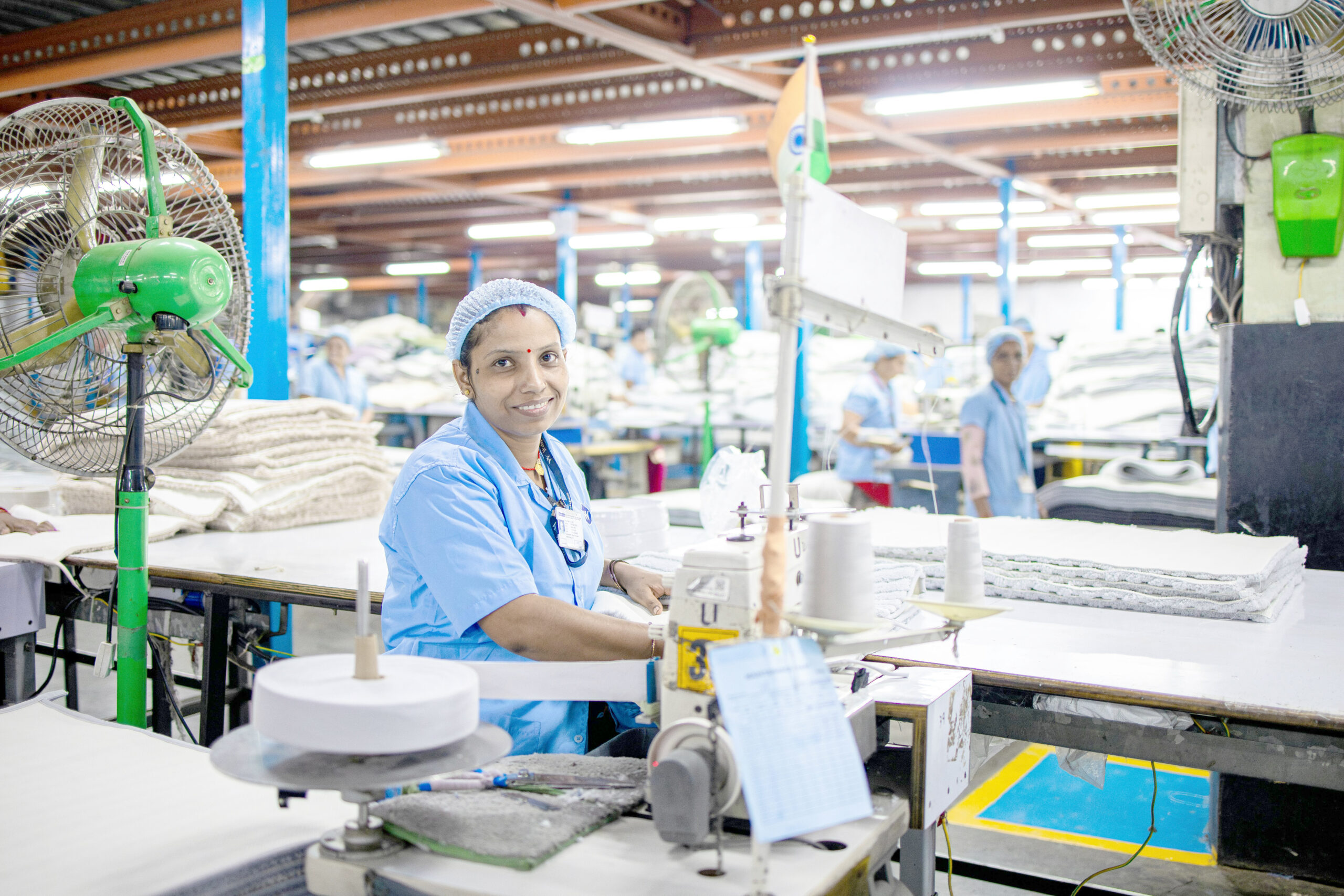
The past few months have shown that India is steadily building the foundations for a people-centred and future-ready transition. A notable development is that policy conversations are no longer limited to technology and emissions. We are now asking: who benefits from this shift? Can traditional workers find new jobs? Will communities have a say in what happens to their land? Can women lead this change?
In India, the discourse is diving deeper and evolving with a focus on aspects of finance, gender, community, skills, and the role of industry as critical levers in putting a people-first approach to energy transition.
Policy and Industry Signals Shaping a Future-Ready Workforce
Skills and workforce development continue to be a central theme. The new Labour Codes, enacted in November 2025, created a reskilling fund where employers must contribute the equivalent of 15 days’ wages when workers are laid off, helping them learn new skills and find new jobs.
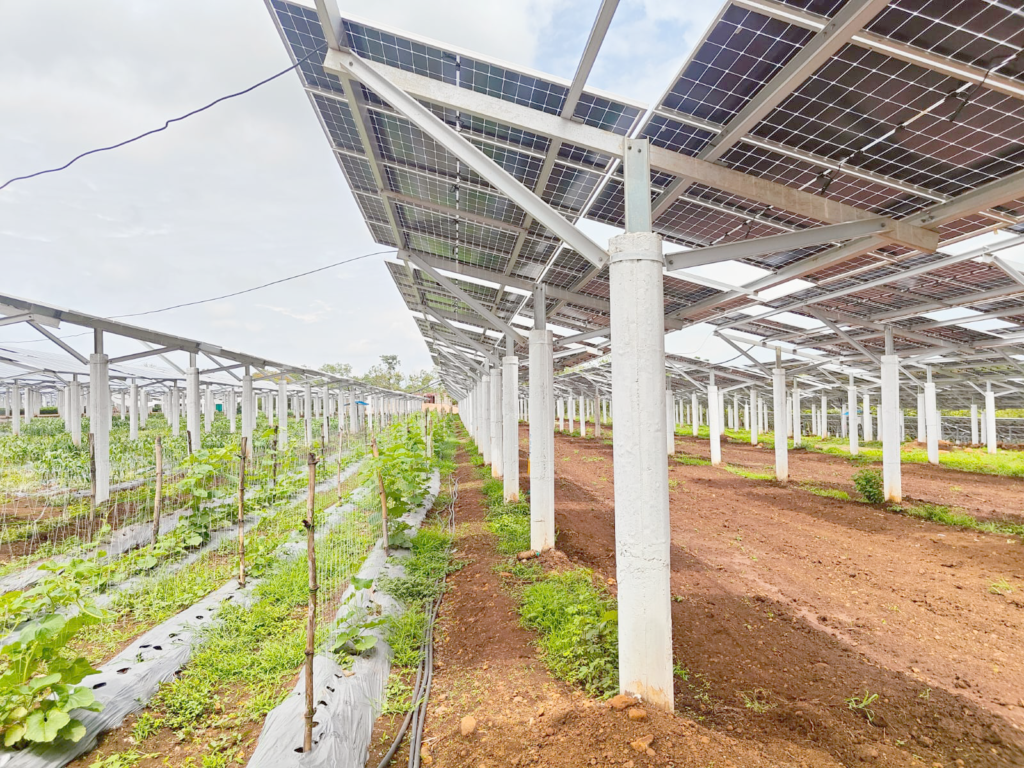
Industry is emerging as a torchbearer for upskilling the workforce for green futures. Companies are partnering with skilling centres to advance industry-led training in the automobile and energy sectors. BluPine Energy, for instance, has expanded rural skilling by establishing local training centres that specifically link women participants to employment opportunities in the clean energy sector. Also, partnerships between NSDC and organisations like Tata Power and WRI India highlight growing momentum for green skills development.
Amplifying Community and Local Level Actions
Community-centred approaches are gaining formal space. In January 2025, the Ministry of Coal released new Guidelines for Preparation of Mining Plan and Mine Closure Plan for Coal and Lignite Blocks, which mandate that a minimum of 25% of the five-yearly escrow amount be utilised for community development and livelihood-related activities. Additionally, the Ministry released the RECLAIM framework (Revitalising Ecosystems and Communities through Local Actions for Inclusive Mine-closure) in July 2025, which emphasises community participation, inclusion, and local leadership in mine closure decisions.
The District Mineral Foundation (DMF), established under the 2015 MMDR Act, is a keystone for people-centric and community welfare interventions in mining regions. 2025 marked a decade of its operations, with over ₹1 trillion accrued to the DMF so far. In the next 10 years, these accruals are expected to rise to ₹2.5-3 lakh crores. Reports on DMF highlight the need for bottom-up planning and beneficiary identification to maximise targeted welfare.
At the ground level, the Ministry of Panchayati Raj is incentivising local climate action and self reliance through the establishment of special national awards which recognise select Panchayats’ efforts towards the cause. Nonetheless, community participation and transparency continue to be aspects we must strive to strengthen, particularly in emerging segments like the critical minerals sector, where public hearing for mining projects are currently exempt.
Building a Transition Resilient Industry Ecosystem
Industry, especially MSMEs, are also a key focus, given their vital contribution to both the economy and employment opportunities. Increasing attention is being given towards building a supportive ecosystem. In July 2025, the government launched the ADEETIE scheme (Assistance in Deploying Energy Efficient Technologies in Industries & Establishments), implemented by the Bureau of Energy Efficiency under the Ministry of Power, with a budgetary outlay of ₹1,000 crore. It is helping MSMEs upgrade to energy-efficient technologies through financial aid and technical support, boosting their competitiveness and sustainability. With the finance, knowledge, and skills ecosystems coming together, MSMEs can turn transition-related challenges into newer possibilities.
Reorienting Finance for Transition Strategies
The draft Climate Finance Taxonomy, released by the Department of Economic Affairs, Ministry of Finance, in May 2025, recognises transition activities and brings hard-to-abate sectors such as steel and cement into the fold. Also, RBI’s revised Priority Sector Lending (PSL) guidelines, effective from April 2025, amended loan limits, expanded what counts as renewable energy and social infrastructure, and sharpened focus on weaker sections (particularly women) to boost lending for key transition-vulnerable sectors like agriculture, MSMEs, and renewable energy.
Additionally, the Ministry of Coal’s ARTHA green financing framework for mine repurposing, alongside the LIVES framework, a practitioner’s guide for responsible and sustainable mine closures, signals a shift towards coordinated efforts to enable implementation of repurposing strategies and creation of a resilient ecosystem post mining.
The ARTHA green financing framework aims at channeling investment towards mine closure projects by leveraging different green finance instruments (eg. debt financing, equity financing, risk mitigation instruments, and grant-based funding instruments) and suggests financial as well as non-financial parameters for funding projects.
Gender Considerations in Advancing Energy Transition
India has seen encouraging progress in female labour force participation rate (FLFPR), rising from 23.3% in 2017–18 to 41.7% in 2023–24, though there remains considerable room for improvement.
Attention to gender is slowly strengthening. The Heinrich Böll Foundation India’s report on gender and just transition shows that women experience both risks and opportunities differently, facing compounded challenges such as loss of household income, increased unpaid care work, exposure to social vulnerabilities, and limited access to new green jobs. Sectoral deep-dives, including studies by Vasudha Foundation and OMI, have shown that the historically male-dominated transport and automobile sectors continue to reflect broader gender disparities. For instance, out of the total registered 8.4 million unorganised workers in the Automobile and Transportation industry, 0.2 million are females, i.e., only 2.6%.
The growing focus on women in credit guidelines, skilling ecosystems, and livelihood-related schemes points to a positive shift. With more deliberate design, these trends can help ensure that women are not left behind as sectors evolve.
Together, these developments signal an ecosystem-driven approach that sees transition as both a social and economic opportunity. The task ahead is immense, but the direction is clearer than before. India is steadily building an ecosystem where individuals, communities and small enterprises can participate in and benefit from the transition. This is a hopeful sign of a future that is both green and equitable.
Several organisations, including Vasudha Foundation has developed reports and papers across domains such as industry, finance, gender, mobility, state and district-level initiatives, and people-centric green growth, highlighting diverse pathways toward an inclusive energy transition.