



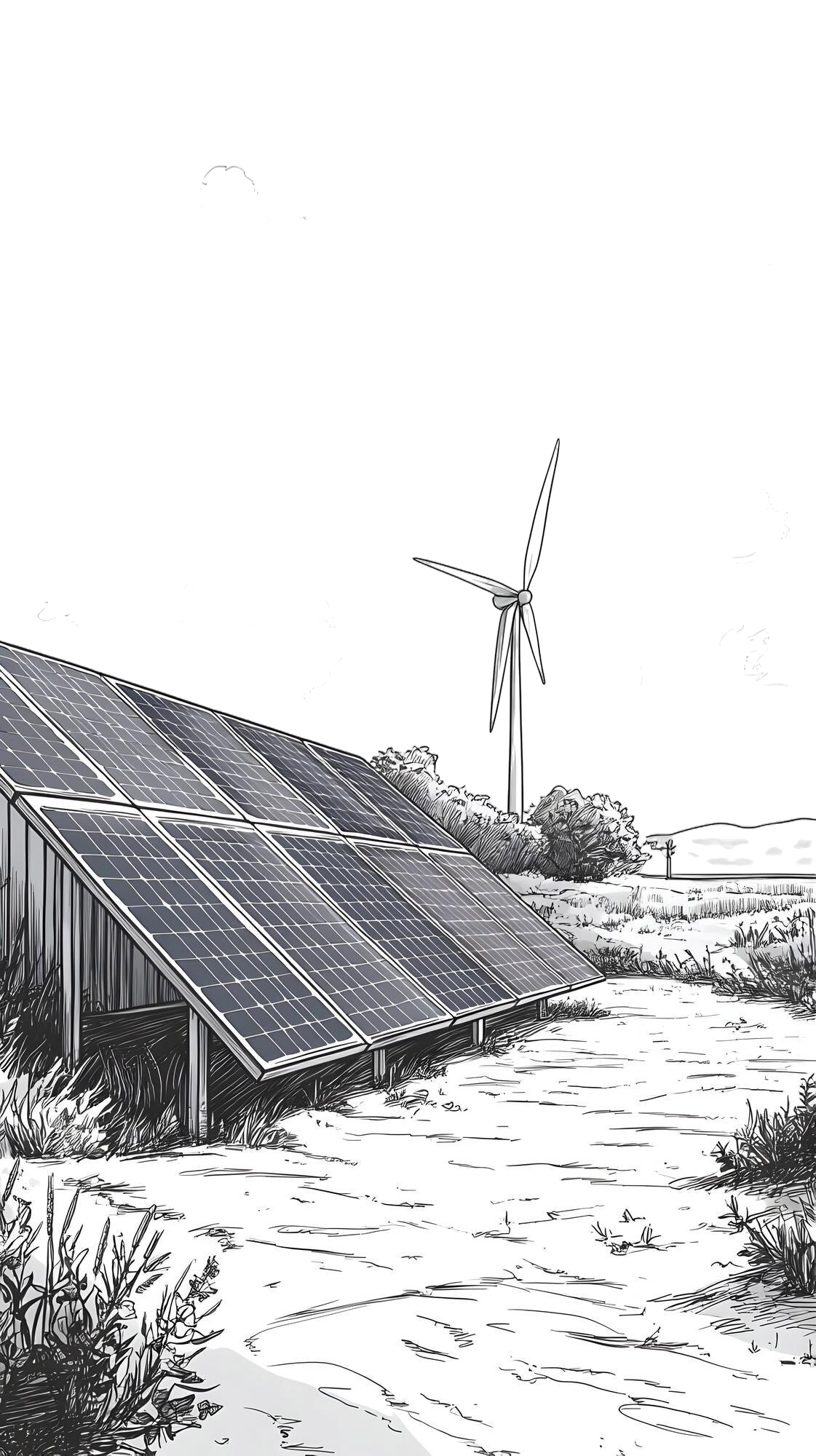
We speak to you from 2047, from a country that embedded sustainability within its development strategy, recognising it as essential to long-term growth and national resilience.
For us, the energy transition is no longer a policy phrase. It is embedded in the functioning of cities, the strengthening of rural economies, and the planning of growth with long-term resilience in mind. Reliable power, affordable energy access, community resilience, system stability are recognised as outcomes of sound development choices, not trade-offs.
There was a phase when energy decisions were framed as binaries; fossil fuels versus renewables, growth versus climate priorities, affordability versus ambition. Those debates reflected their time. What gradually changed was not just technology or markets, but alignment of intent.
You realised that the vision of Viksit Bharat required systems that strengthened public health, protected natural capital, and build resilience. Development pathways that undermined these foundations were recognised as inefficient and costly in the long run.
The transition itself was phased and pragmatic. Conventional fuels continued where necessary, even as cleaner technologies scaled rapidly. Electric mobility, distributed renewable energy, and grid modernisation moved from pilot stages to mainstream planning. Energy shifted from being a source of uncertainty to a domain of coordinated, forward-looking governance.
The grid learnt to listen to the demands from homes, industries, vehicles. Cities learned to match demand with daylight and wind. Power cuts, once woven into everyday life, became stories elders told, not experiences children carried.
The strength of India’s transition was not without challenges. It was not linear, and it was not flawless. But it was guided by direction and intent.
Policy frameworks, market responses, and citizen participation increasingly reinforced one another. Over time, development and climate action ceased to be positioned as competing priorities; each strengthened the case for the other. One became the proof of the other.
We did not solve the climate crisis. Floods still come. Heat still tests us. But we are less fragile now, because we chose resilience over reaction.
From 2047, what stands out is not individual targets or timelines, but a shift in approach. The central question evolved from short-term comparisons to whether decisions were scalable, practical, and aligned with long-term national interest but rooted in local contexts.
That shift made the difference.
The future did not require extraordinary interventions. It targeted finance and the confidence to act before constraints became crises.
From,
A generation that lives with the outcomes of your decisions, and thanks you for choosing foresight over delay.