



Jaideep Saraswat, Nikhil Mall
India stands at a critical juncture in its mobility transition. With an ambitious target of 30% electric vehicle sales by 2030 and current EV penetration at 8.4%, the country is making significant strides toward electrification. However, this focus on new vehicle sales overlooks a massive opportunity hiding in plain sight: the 200+ million vehicles already on Indian roads.
The Retrofitment Imperative
Retrofitment refers to converting existing ICE vehicles into electric vehicles, thereby extending their usable life while cutting emissions. It is a powerful tool because it allows us to reduce the carbon footprint of vehicles already on the road, not just future ones. This approach brings multiple benefits: it is often cheaper than buying a new EV, and in many cases, even less expensive than purchasing a new ICE vehicle. It reduces the environmental burden of scrapping vehicles and manufacturing new ones, while also minimizing the additional congestion that arises when older vehicles are sold in the second-hand market as their owner’s upgrade. Beyond this, retrofitment directly supports India’s energy security by reducing dependence on imported fossil fuels and accelerating the journey toward self-reliance. In every sense, it is a “no-regret strategy” which economically sensible, environmentally sound, and socially responsible.
Yet despite these advantages, retrofitment has not gained widespread traction in India. Several challenges stand in the way such as lack of consumer awareness, limited financial incentives for retrofitted vehicles, fragmented market players, and restrictive state regulations. Safety concerns and doubts about the reliability of retrofitted vehicles also discourage adoption, as does the absence of visible success stories or testimonials. Many potential users hesitate to take the leap because they simply do not know enough about the process, or they fear that their experience will fall short of expectations. While recent policy developments and greater transparency in the ecosystem are beginning to close some of these gaps, the need for credible, first-hand accounts remains strong.
The Untold Story: Real Experiences from Indian Roads*
To address this, Vasudha Foundation conducted one of the first detailed surveys to understand the real experiences of people who have chosen retrofitment. We spoke with 28 individuals who had retrofitted their two-wheelers in the past few years. These vehicles, spanning four different OEMs and six models, were on average about 12 years old and covered a typical daily distance of around 43 kilometres. Interestingly, before opting for retrofitment, almost all respondents had initially planned to purchase a new vehicle, intending either to sell or scrap their old one.
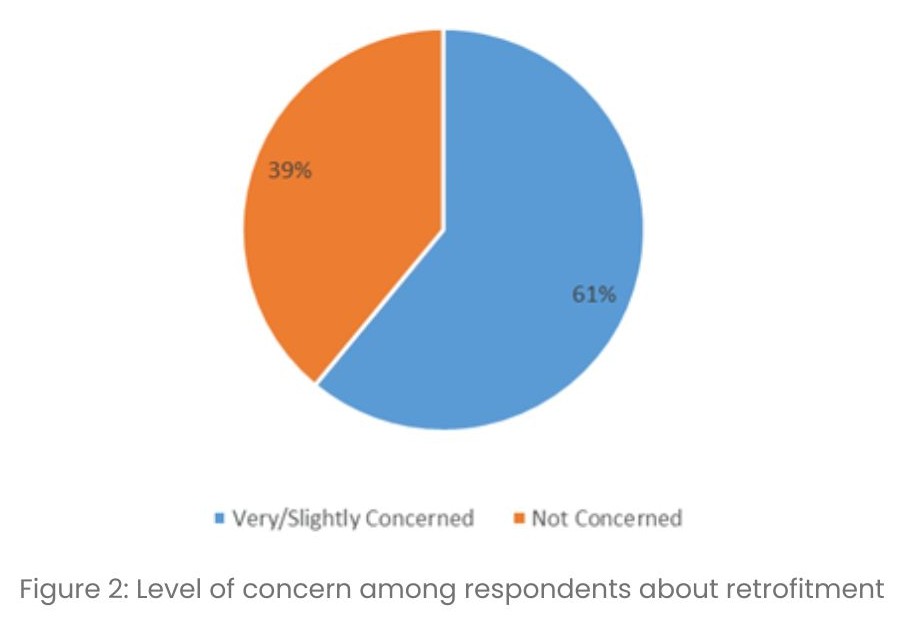
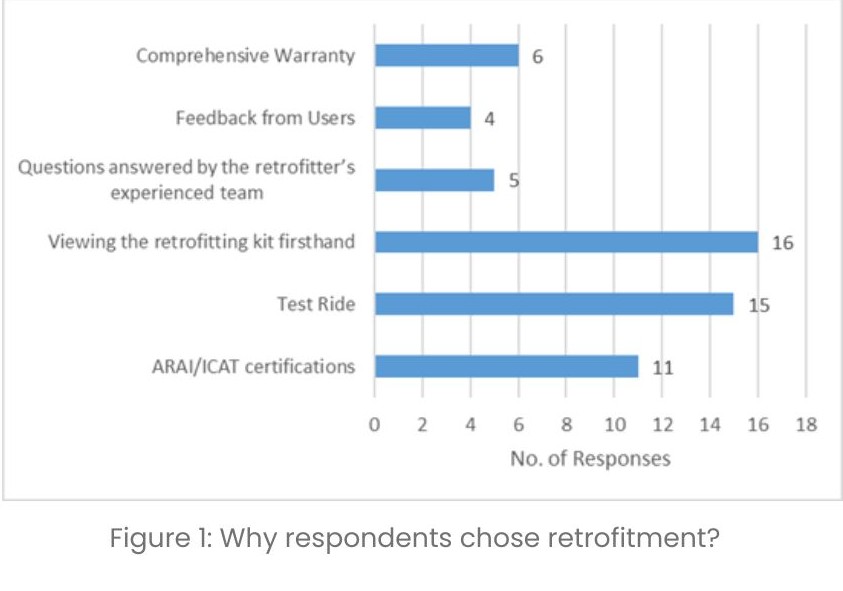
However, 90% ultimately chose retrofitment because it was the easier and more affordable option compared to a new purchase, whether ICE or EV as seen in Figure 1. The remaining 10% were motivated by personal attachment to their vehicles, whether because of sentimental value or because the vehicle had been a gift.
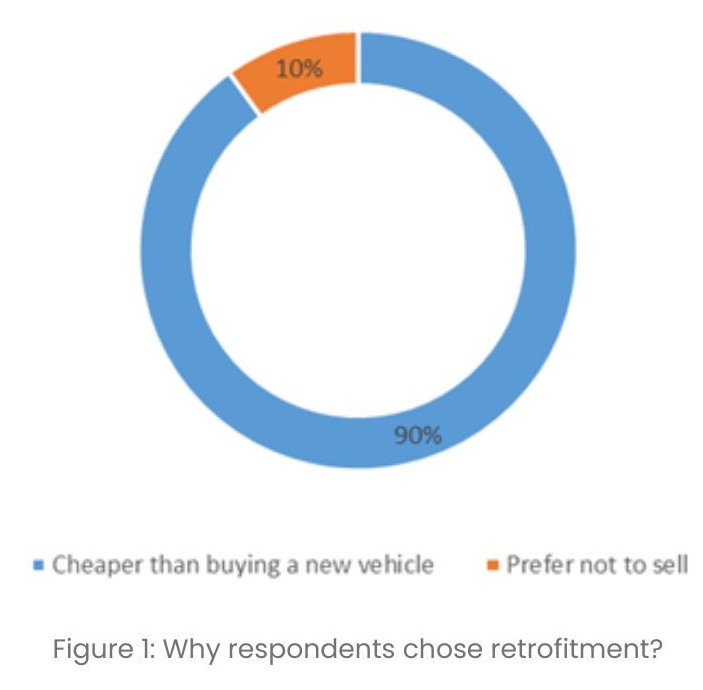
The decision to retrofit was not without hesitation. About 61% of participants expressed concerns about safety and battery life before going ahead with retrofitment as seen in Figure 2.
What helped them overcome these fears were tangible experiences: seeing retrofit kits in person, taking test rides, and receiving reassurances from service providers as seen in Figure 3. These interactions-built confidence and helped users trust the technology.
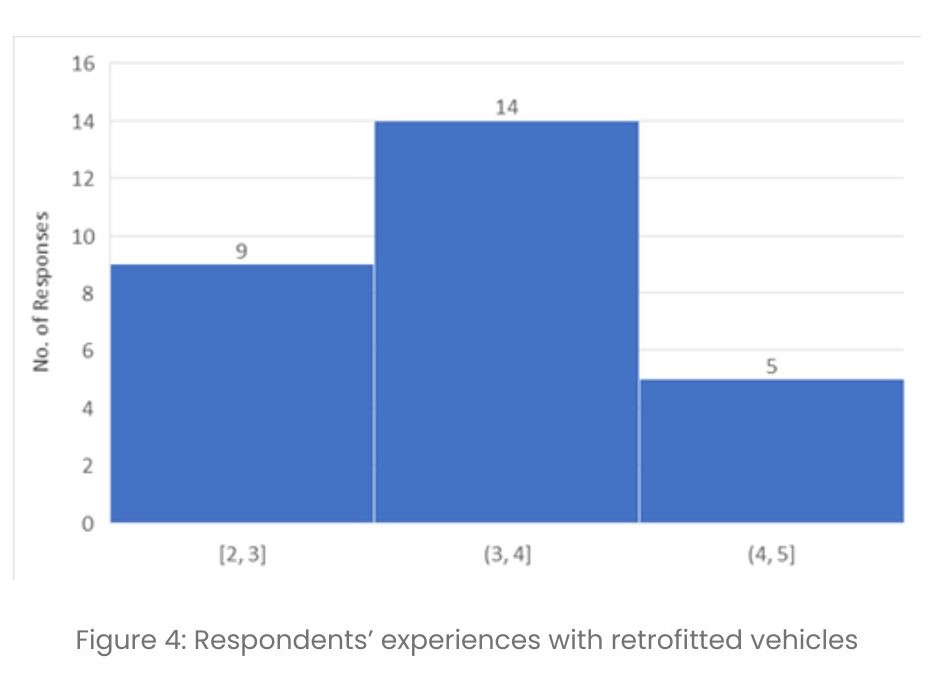
Most importantly, when asked to rate their experience of riding a retrofitted vehicle on a scale of one to five, where one indicated a poor experience, three meant expectations were met, and five represented expectations exceeded, the average score came to 3.75. This is a strong indicator of overall satisfaction. Around 67% of responses were above three, and nearly 18% were above four. The results suggest that the majority of users were pleased with their retrofitted vehicles, finding that they delivered on the benefits promised at the start of the process.
What is happening in India has significant implications for other Southeast Asian countries grappling with similar challenges of high ICE vehicle dependency and the urgent need for decarbonization. Retrofitment has the potential to serve as a model that balances affordability, sustainability, and practicality. The early findings from the two-wheeler segment are promising, showing that retrofitment is not just a theoretical solution but a real, viable pathway. The task now is to scale this solution, build consumer trust, and make retrofitment a mainstream option.
The detailed stories of what worked well, where users faced challenges, and what can be improved will be shared in a forthcoming report by Vasudha Foundation. These insights will not only help bridge the knowledge gap but also play a crucial role in shaping the ecosystem, encouraging more people to adopt retrofitment, and strengthening India’s clean mobility transition. For now, the message is clear: if India is serious about achieving its EV ambitions and cutting emissions at scale, retrofitment must be part of the solution. Stay tuned for more.
*Survey Conducted by Vasudha Foundation