



India’s energy transition is unfolding against the everyday realities of increasing heat stress and rising electricity demand to deliver reliable and affordable power to households, small businesses, and industry. As incomes rise, cities expand, and cooling becomes essential, the power system is undergoing pressure to balance demand and resilience to climate variability.
For millions of households, this transition is experienced through the availability, reliability, and cost of electricity in daily life. Extreme heat events and weather disruptions are testing grid resilience; exposing the social and economic costs of outages, particularly for the vulnerable communities.
In our latest Power Outlook Series, we highlight how Maharashtra, Madhya Pradesh and Rajasthan recorded the highest number of 1,256 hailstorm events between 1975 and 2020. Together these states host nearly 55.9 GW of solar PV capacity underscoring growing exposure of renewable assets to extreme weather without proactive mitigation.
At the same time, the pace of clean energy growth is accelerating. In July 2025, renewable energy met more than half of India’s national electricity demand for the first time. Capacity additions also remained strong, with 48 GW of renewables alone added in 2025. This progress sharpens the central challenge: integrating a rapidly shifting, renewables-heavy generation mix into a power system built for predictable, centralised supply without compromising reliability, affordability or service quality.
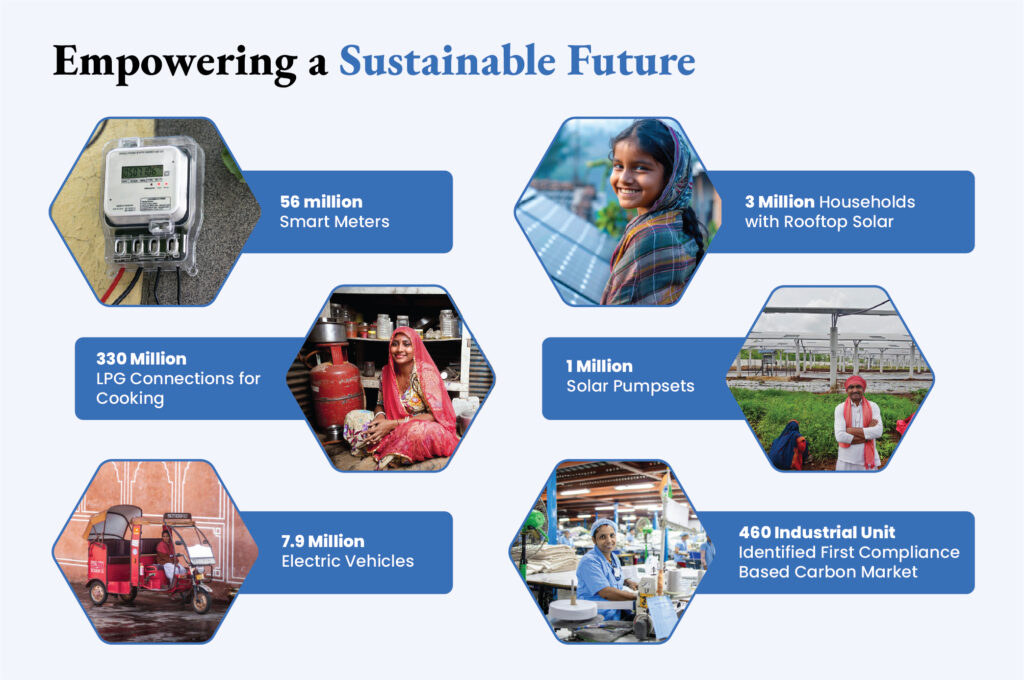
Navigating the energy transition requires shifting from grid upgrades to a systemic reform. Institutional resilience, informed and empowered consumers and transparent markets must become the foundation pillars. Ultimately, the success of the power sector will depend on ‘human’ linchpins: workforce skilling, digital inclusion and a fundamental shift in consumer behavior.
Institutional coordination across levels of government is the need of the hour. India’s power sector operates within a shared governance framework, where responsibilities for electricity, land, labour, and public service delivery are divided between the centre and the states. So, system performance depends on alignment across institutions. The coming years will test India’s national ambition whether complex energy transitions can be governed effectively under real institutional and social diversity.
India’s decentralised governance structure will shape how the energy transition unfolds on the ground. Across states, transition pathways reflect differing resource endowments, political economies, development priorities and social conditions. While this federal structure adds coordination complexity, it also enables locally responsive solutions. The diversity allows multiple policy instruments and delivery models to be tested simultaneously across urban and rural contexts, industrial and agrarian economies and high and low-income regions. Some approaches may stall, others will evolve and a few will demonstrate pathways that align system performance with social outcomes such as employment, affordability, and access. Over time, this iterative process strengthens the transition by allowing learning, adaptation, and selective scaling.