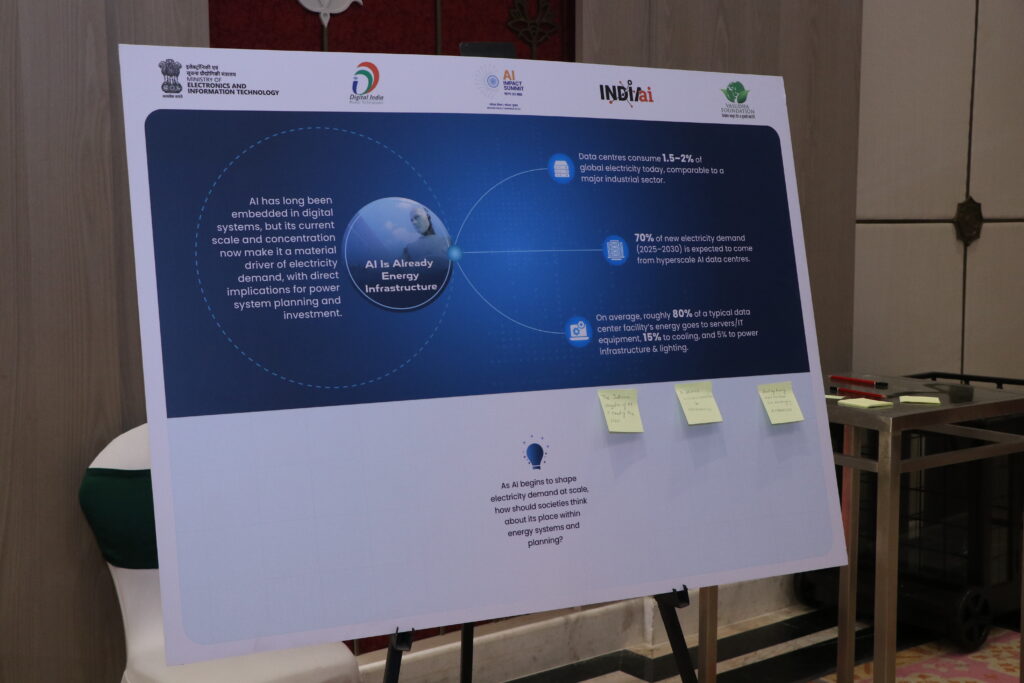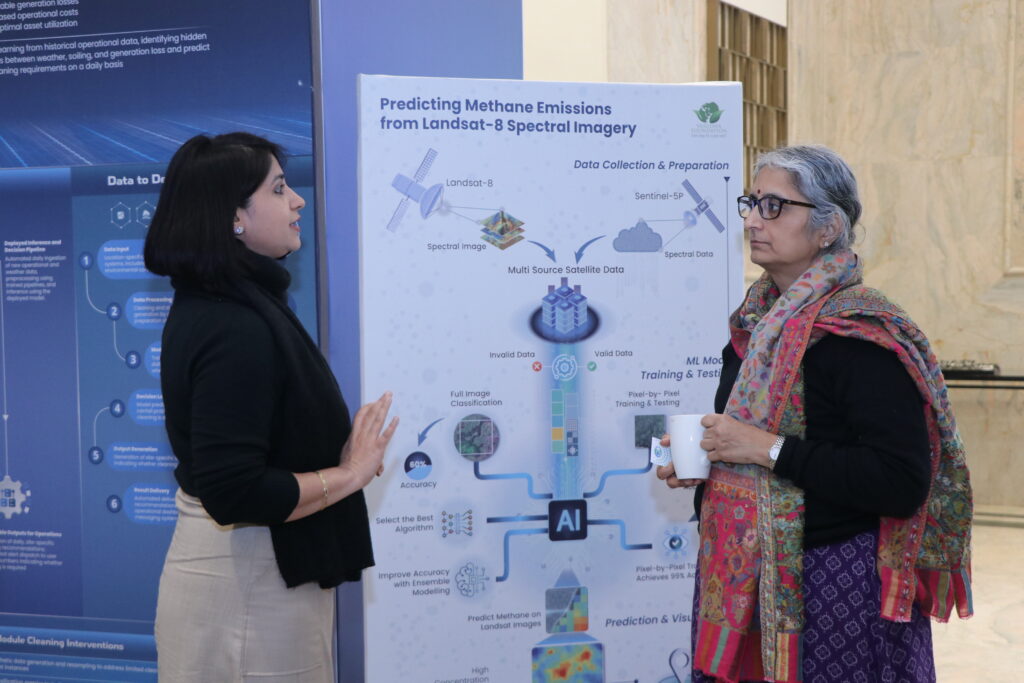
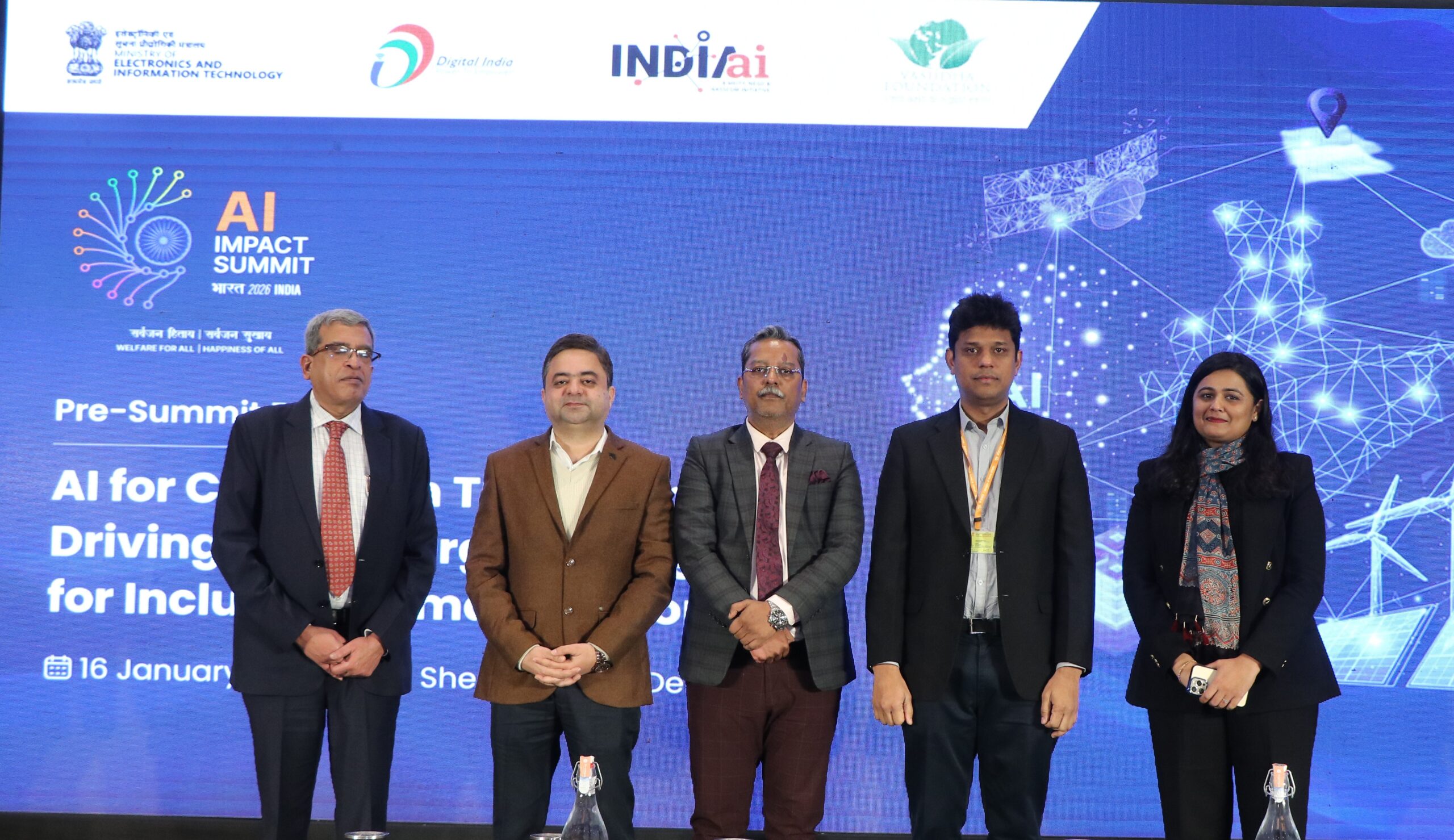


Artificial Intelligence (AI) is rapidly emerging as a general-purpose technology with far-reaching implications for energy systems, climate action, and sustainable development. Advances in machine learning, data availability, and computational capacity have accelerated AI deployment across sectors, positioning it both as a growing source of energy demand and a critical enabler of the clean energy transition and climate resilience. As countries pursue ambitious climate targets alongside digital transformation agendas, shaping the AI-energy-climate nexus has become a key policy and implementation priority.
India stands at a pivotal intersection of rapid economic growth, accelerating digitalisation, and urgent climate action. With rising energy demand, ambitious decarbonisation commitments, and a fast-expanding AI ecosystem across industry, academia, and public institutions, India is uniquely positioned to leverage AI to drive a clean, resilient, and inclusive development pathway on its journey toward net zero by 2070. At the same time, India’s high exposure to climate risks, ranging from extreme heat and floods to droughts and cyclones, underscores the importance of AI for climate adaptation, including weather forecasting, early warning systems, risk analytics, and decision support, as recognised under the UNFCCC framework.
In this context, the AI for CleanTech Transformation: Driving Low-Energy Intelligence for Inclusive Climate Action pre-summit event served as a focused platform to connect policy priorities with real-world clean technology deployment and emerging AI system choices. Bringing together policymakers, global development institutions, clean technology and mobility platforms, AI solution providers, startups, and research organisations, the event examined how carefully chosen, energy-efficient, and people-centric AI models can support climate mitigation and adaptation, strengthen institutions, and empower end users, while generating actionable insights for policy, research collaboration, and responsible AI adoption in India’s clean energy transition.
Session I: Plenary Session
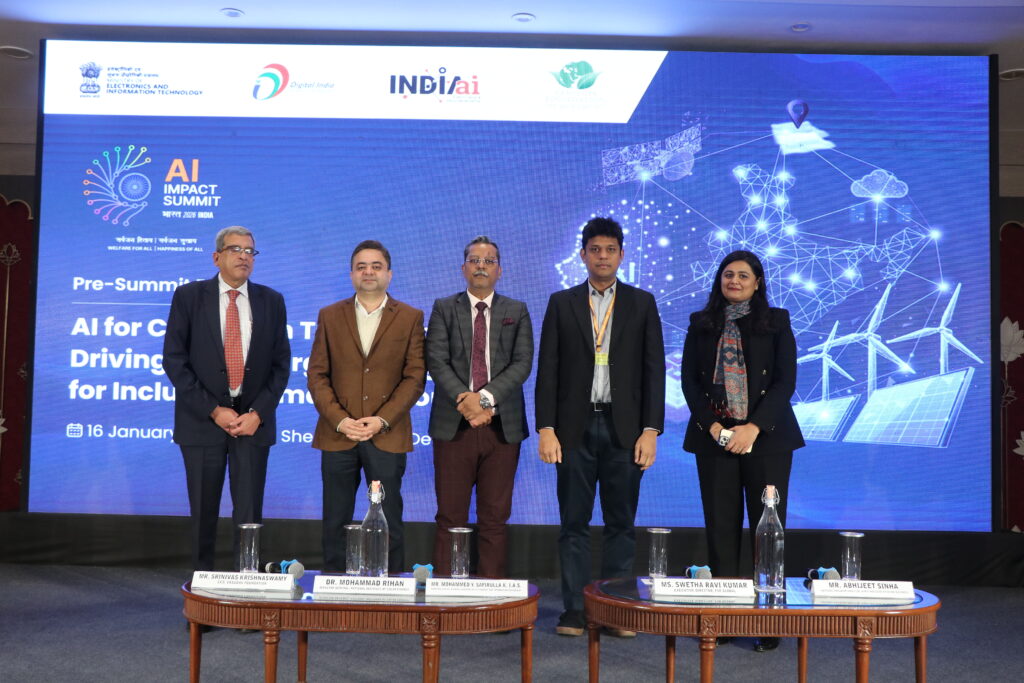
The plenary session positioned AI as a strategic enabler for clean energy and climate action, emphasising low-energy, responsible, and people-centric deployment. It highlighted that AI’s value lies in translating complex datasets into actionable insights, with strong emphasis on data quality, governance, and accessibility. Platforms like the India Climate and Energy Dashboard (ICED) and India Energy Stack (IES) were presented as key digital public infrastructure enabling AI adoption. Practical applications across forecasting, grid optimisation, and solar diagnostics were showcased, while also acknowledging AI’s energy footprint and the need for efficient models. The session concluded that AI must be inclusive, scalable, and aligned with public-interest outcomes.
Session II: Panel Discussion – Choosing the Right AI: Narrow and Generative Models in Clean Technology Systems
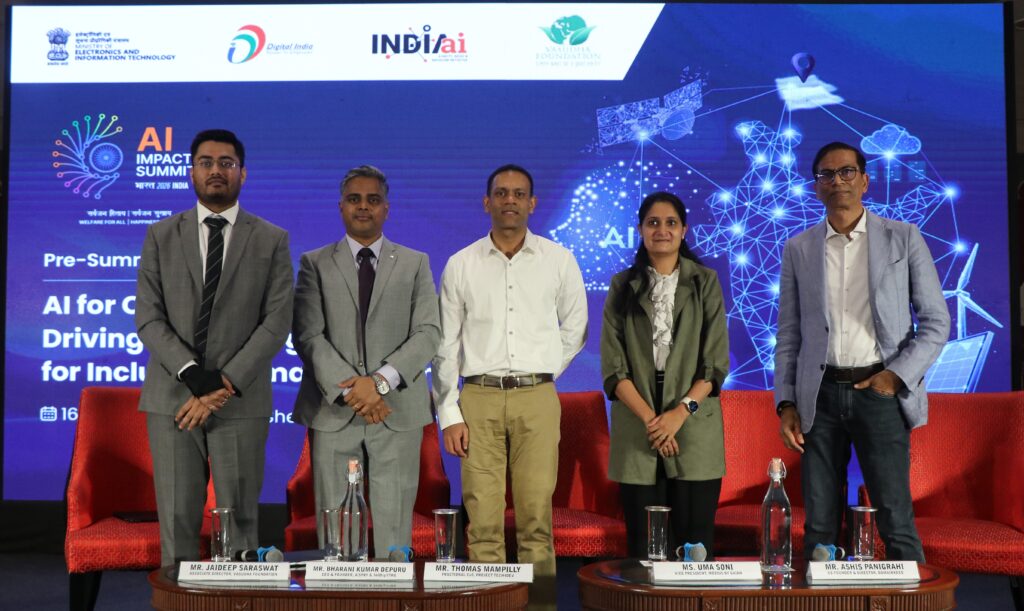
The discussion focused on selecting between narrow AI and generative AI, emphasising that not all problems require large, energy-intensive models. Narrow AI was identified as efficient and suitable for clean tech applications, while generative AI offers new capabilities but with higher energy costs. The panel stressed model efficiency, contextual intelligence, and avoiding indiscriminate use of LLMs. Concepts like model routing and lifecycle energy assessment were highlighted, along with the need for transparency and emerging regulations. The session concluded that AI must be reliable, energy-aware, and focused on solving real-world problems.
Session III: Spotlight Session I – Operationalising AI in Clean Technologies: Applications, Data, and Deployment

The session emphasised that successful AI deployment depends on problem definition, data quality, explainability, and user-centric design. It highlighted real-world applications in predictive maintenance, battery storage, logistics, and electric mobility, showing AI’s role in improving efficiency, safety, and emissions reduction. Key challenges included data interoperability, standardisation, and gaps between models and real-world conditions. The discussion also pointed to shifts toward edge AI and automation, concluding that AI must be scalable, trusted, and grounded in real-world constraints.
Session IV: Spotlight Session II – Harnessing AI for Climate Action to Empower People, Leverage Data, and Strengthen Institutions

This session focused on the human and institutional dimensions of AI, emphasising that climate action is local and requires trust, transparency, and accessible data. AI was highlighted as a tool to unlock public value, reduce data fragmentation, and enable proactive decision-making. Use cases in agriculture, weather forecasting, and agroforestry demonstrated AI’s role in empowering users and supporting climate resilience. Challenges such as data reliability and digital exclusion were discussed, stressing inclusive design and institutional support. The session concluded that AI must be people-centric and aligned with real needs on the ground.
Conclusion
Collectively, the sessions underscored that AI’s true value in clean technologies lies not in scale or complexity alone, but in purposeful design, efficient model choice, strong data foundations, and deep engagement with end users and institutions. From national digital public infrastructure and grid modernisation to last-mile agricultural advisories and logistics optimisation, the discussions highlighted that AI must remain transparent, energy-aware, and grounded in real-world constraints. The pre-summit concluded with a shared recognition that advancing AI for climate action in India will require coordinated efforts across government, industry, civil society, and academia, ensuring that AI strengthens resilience, enables inclusive growth, and accelerates the clean energy transition while remaining aligned with India’s broader development and climate imperatives.